
What a training plan is and which kinds there are
What is a training plan
A training plan is a set of planned activities and coach's recommendations that an athlete should complete to reach the goals of the plan.
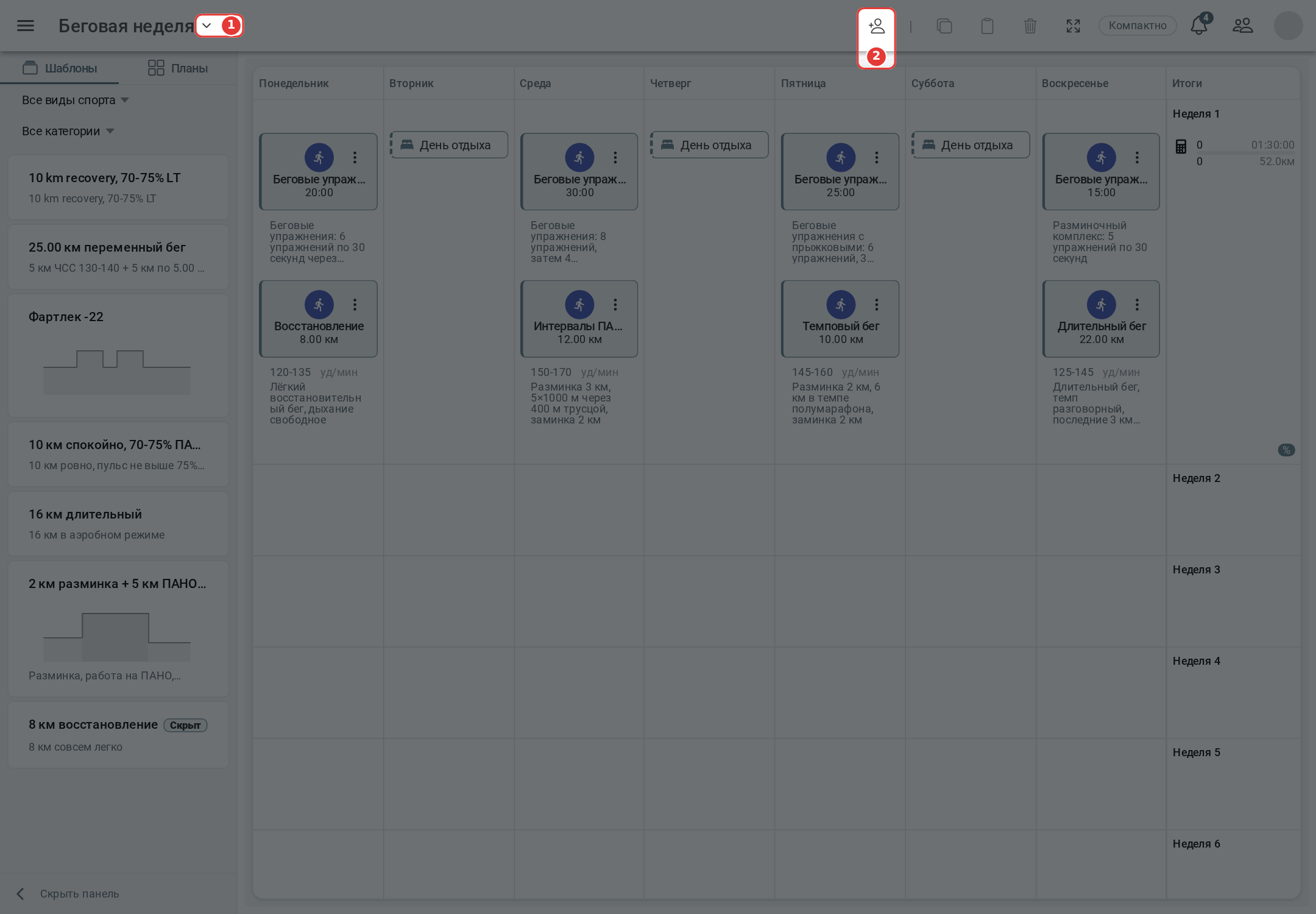
It looks like a calendar with planned activities for one athlete, but with several important differences. Such a plan can be:
- made either in specific calendar dates or without dates;
- assigned to several athletes at once;
- packed as a separate product and put on sale - the training plans store still works in the previous version of the app.
When a coach assigns a training plan to athletes, the plan entries appear in their calendars: activities, events and competitions. Such an activity card has a “from a training plan” mark.
How to create a plan and fill it is described in “For coaches: create a plan”, how to assign it to athletes - in “For coaches: assign a plan to athletes”. The list of plans and actions with them - in “For coaches: manage plans”.
There are several plan types in Staminity:
- Plan with non-fixed dates;
- Plan with fixed dates;
- Dynamic plan.
Plan with non-fixed dates
A training plan with non-fixed dates is a universal plan. A coach can apply it to different athletes on different dates. The weeks of such a plan are labeled “Week 1”, “Week 2” and so on.
The dates of the entries in the athletes' calendars are set at each assignment of such a plan.
Such a plan can be used:
- as a typical plan for starting work with beginners;
- as a universal author's plan preparing amateurs of about the same level for their first marathon, half marathon or race;
- as a template of several weeks of training aimed at developing certain skills.
Plan with fixed dates
In a plan with fixed dates, the coach creates the entries on specific calendar dates. When such a plan is assigned in the plan dates, all athletes get the activities on the same dates.
Such a plan can be used:
- as an author's plan preparing amateurs for a specific race (Moscow marathon, Berlin marathon);
- for planning group activities.
Dynamic plan
A plan with fixed dates can also be made dynamic. In a dynamic plan, the changes the coach makes in the plan should be passed to athletes even after the assignment.
Passing changes to athletes after the assignment is temporarily unavailable: this option is locked when assigning.
Such a plan is convenient:
- for training camps. A group of athletes going to a camp is attached to such a plan and each participant sees the actual schedule in their calendar;
- for a coach working with a corporate running or triathlon team training on one schedule;
- for planning joint activities in clubs that hold joint in-person sessions.